What are the benefits of automation
time:2026-09-30
browse:16
Automation technology, which replaces manual labor with machines, software, or systems to complete repetitive and regular tasks, has been widely applied in various fields such as industrial manufacturing, service industry, healthcare, and agriculture. Its core value lies not only in "reducing manpower", but also in optimizing production and service processes from multiple dimensions such as efficiency, cost, quality, and safety. The specific benefits can be broken down into the following six categories:
1. Improving efficiency: breaking through the "human physiological limit"
Automation systems can overcome the time constraints (such as no need for rest or leave) and speed bottlenecks imposed by human labor, enabling continuous and high-speed operation and significantly reducing task cycles.
Continuous operation: Industrial robots can produce uninterrupted for 24 hours, avoiding the efficiency losses caused by manual shifts (such as handover time and speed reduction due to fatigue). For example, automotive welding robots can complete 30-50 welding points per hour, which is 2-3 times that of skilled workers.
Process acceleration: Automated software (such as ERP and logistics management systems) can automatically handle tasks such as data entry, order sorting, and inventory updates, avoiding delays caused by manual operations (for example, manual document verification can take several hours, while the system can complete the same task in just a few minutes).
Batch processing: In the field of data (such as financial risk control and data cleaning), automated tools can process tens of thousands of pieces of data at once, whereas manual processing of individual pieces can take days.
II. Cost reduction: From "short-term investment" to "long-term savings"
Although automation requires initial investment in equipment, software development, or procurement costs, in the long run, it can achieve cost optimization by reducing reliance on manpower and minimizing waste.
Reduce labor costs: Replace high-repetitive positions (such as assembly line assembly, warehouse sorting, customer service response), and reduce ongoing labor expenses such as recruitment, training, social security, and salary; for example, after introducing an automated production line, an electronics factory reduced the number of front-line workers by 60%, saving over ten million yuan in annual labor costs.
Reduce material waste: The operational accuracy of automated equipment is much higher than that of manual labor, which can reduce raw material loss during production. For example, in automated food packaging equipment, the sealing error can be controlled within ±0.1mm, avoiding packaging damage and material leakage caused by uneven force in manual packaging (the manual loss rate is usually 5-10 times that of automation).
Reduce management costs: The automated system can automatically generate data reports and monitor process anomalies, reducing the management costs associated with manual inspection, statistics, and error correction (for example, the factory does not need to arrange for dedicated personnel to patrol the equipment 24 hours a day, as the system can provide real-time alarms).
III. Quality assurance: achieving "standardization and zero error"
Manual operations are susceptible to emotions, fatigue, and differences in experience, leading to instability in product or service quality; automation ensures consistency in results through "program standardization" and "high-precision execution".
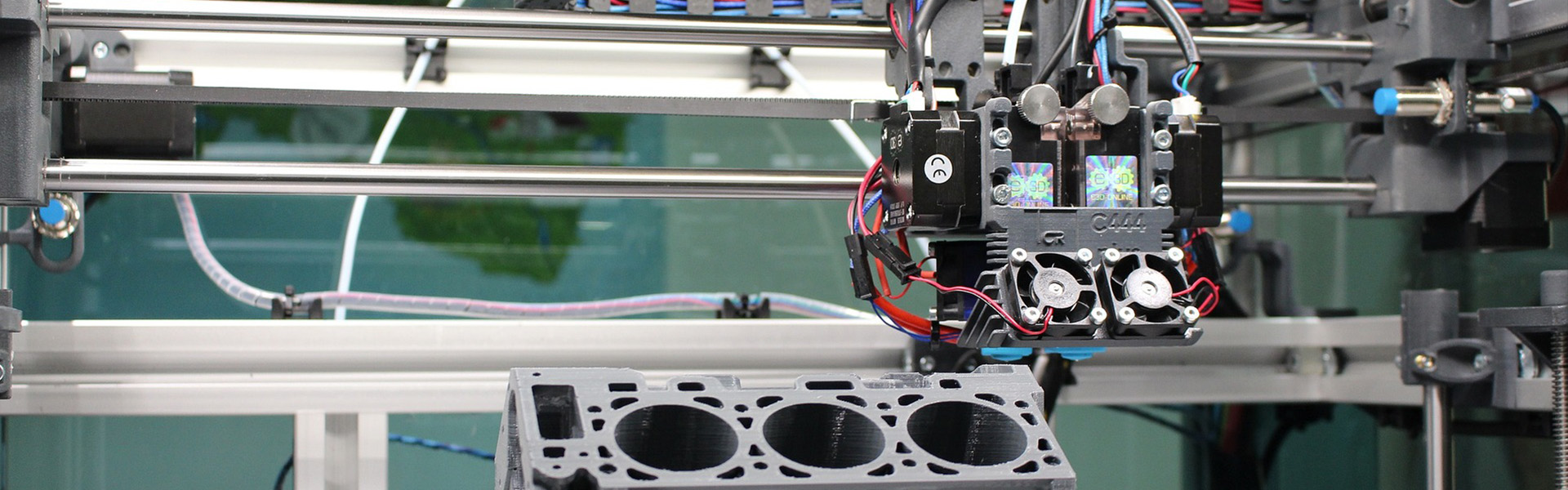
High operational accuracy: Automation equipment in the industrial field, such as CNC machine tools and 3D printers, can achieve positioning accuracy of up to 0.001mm, enabling the production of high-precision parts that cannot be produced manually (such as aeroengine blades and medical minimally invasive surgical instruments).
Strong quality stability: The same set of automated procedures can be executed tens of thousands of times, with a product pass rate close to 100%. For example, in the assembly of mobile phone screens, the pass rate of manual bonding is about 92%, while that of automated equipment can be increased to over 99.5%.
Real-time quality monitoring: The automated system, combined with sensors and visual inspection technology (such as AI visual sorting), can identify and automatically remove non-conforming products in real time, preventing quality issues caused by human oversight from reaching the market.
IV. Ensuring Safety: Replacing "Operations in High-Risk and Harsh Environments"
In scenarios that are harmful to humans, such as those involving toxicity, high temperatures, high pressures, heights, and radiation, automation equipment can replace manual labor, thereby fundamentally reducing safety risks.
Industrial safety: Automated reactors in the chemical industry can automatically control temperature and add materials under high temperature and high pressure conditions, avoiding the risks of explosion and poisoning caused by manual operation; automated tunneling machines in the mining industry can operate in areas with high underground gas concentrations, reducing mining accidents.
Service industry safety: Automated disinfection robots in the medical field can enter COVID-19 isolation wards to complete disinfection, preventing medical staff from being infected; automated unmanned forklifts in the logistics industry can operate in high-rack areas, avoiding the risk of manual forklifts toppling over.
Emergency safety: In disaster scenes such as earthquakes and nuclear leaks, automated detection robots can enter areas inaccessible to humans, transmit environmental data, and provide support for rescue efforts.
V. Optimize resource allocation: release manpower to do "high-value work"
Automation liberates humans from repetitive and low-skilled tasks, allowing them to shift their focus to high-value areas such as innovation, decision-making, and service, which require "creativity and emotion".
In the industrial sector, workers are shifting from assembly line work to equipment maintenance, program optimization, and product research and development, driving the upgrading of the manufacturing industry from "labor-intensive" to "technology-intensive".
In the service industry, automated ATMs and mobile banking have replaced manual counter services for deposit and withdrawal transactions, allowing tellers to shift their focus to providing high-value-added services such as financial consulting and credit services. In the education sector, automated homework grading systems (such as English listening comprehension grading) free up teachers' time to focus on curriculum design and personalized tutoring.
In the agricultural sector: automated seeders and drones are replacing manual tilling and pesticide spraying, allowing farmers to shift towards deep processing of agricultural products and brand operation, thereby enhancing the value of the agricultural industry chain.
VI. Enhancing data-driven capabilities: Providing "precise basis" for decision-making
When executing tasks, automated systems synchronously collect, store, and analyze data throughout the entire process, avoiding errors in manual statistics and providing objective and real-time data support for decision-making by enterprises or institutions.
Production decision-making: The factory automation system can monitor equipment failure rate, product qualification rate, and raw material consumption rate in real time. The management can quickly adjust the production plan through data reports (for example, when the qualification rate of a certain part decreases, the system automatically identifies equipment parameter anomalies, eliminating the need for manual troubleshooting).
Business decision-making: The automated user behavior analysis system of the e-commerce platform can provide real-time statistics on user browsing, purchasing, and return data, automatically recommending products and adjusting inventory (for example, if a product's sales have surged recently, the system automatically triggers a replenishment order to avoid stockouts).
Public service decision-making: The urban traffic automation monitoring system can collect real-time traffic flow data at intersections and automatically adjust the duration of traffic lights to alleviate traffic congestion (for example, if there is a high volume of traffic on a certain road during the morning rush hour, the system will automatically extend the green light duration by 10 seconds).